
College Station Epoxy Flooring installs flake epoxy floors throughout College Station, Texas and the surrounding cities of Bryan, Lake Bryan, Navasota, Caldwell and Hearne, with more than 20 years behind the work. A flake floor is the most requested residential system in this market, and for good reason: it is the one that copes best with a real slab in a real garage.
Vinyl flake is broadcast into a wet base coat and locked under a clear topcoat. The result hides slab imperfection, adds genuine grip underfoot, disguises the wear that any floor picks up, and lets a repair blend in a way a solid color never will.
It is also the system where the difference between a good install and a poor one is most visible a few years later, and almost all of that difference is in preparation and in how heavily the flake was broadcast.
How a Flake Floor Is Built
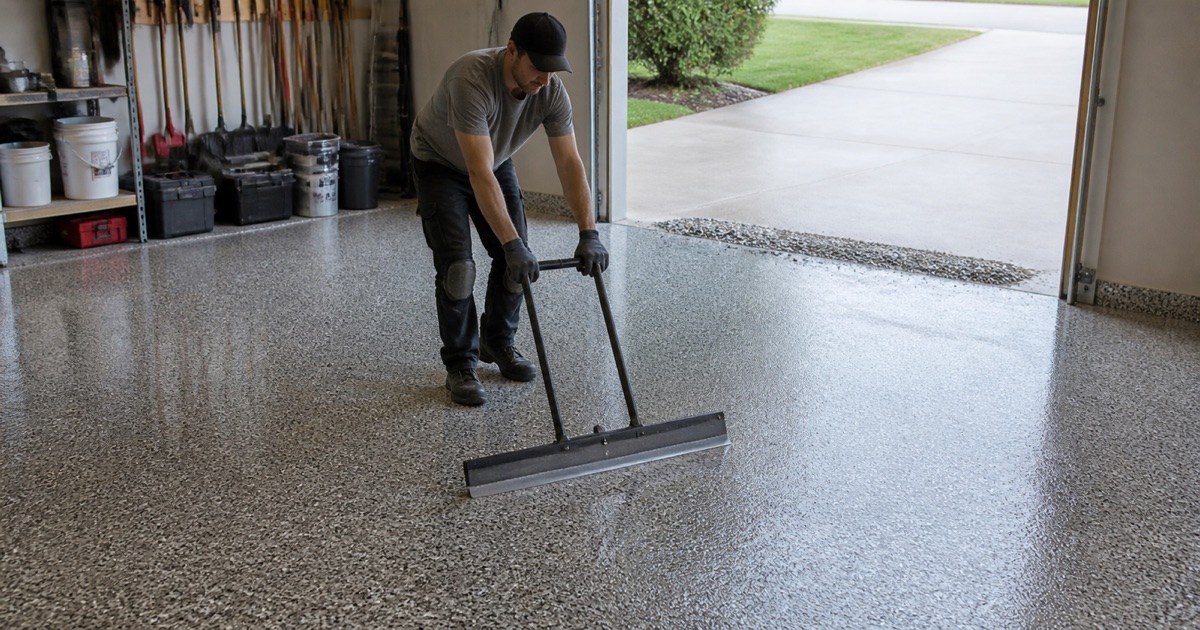
The Base Coat
A pigmented epoxy base is laid onto prepared, primed concrete at a specified spread rate, and it does two jobs at once. It bonds the system to the slab and it holds the flake. The color matters less than people expect, since a full broadcast covers nearly all of it, but it shows through at the edges of every chip and sets the floor’s overall tone. We pick a base that works with the blend rather than defaulting to gray, because the two are chosen together.
Broadcasting to Refusal
Flake is thrown into the wet base until the surface will not accept any more, which is what the trade calls broadcasting to refusal. A partial broadcast leaves base coat visible and produces a speckled look that ages badly, because wear shows against the gaps. Full refusal gives a uniform surface, a consistent texture and a floor that hides scratching for years. Refusal also uses noticeably more flake, which is where a cheap quote usually saves its money.
Scraping and Topcoating
Once cured, the excess flake is swept up and the surface is scraped back to knock down the sharp edges of every chip standing proud. This step decides how the floor feels underfoot, and skipping it leaves a surface that is unpleasant barefoot and hard to clean. The clear topcoat then goes over it, and its thickness determines whether the finished texture is subtle or pronounced. Scraping is the least glamorous step in the whole build and the one you feel every time you walk on the floor.
Choosing the Flake and the Finish
Blend, Size and Color
Flake comes in different chip sizes and in blends mixed to a palette, and both choices change the result substantially. Larger chips read as bolder and more industrial; smaller chips give a finer, more granite-like appearance. A blend containing a color close to the base coat hides imperfection best, which is worth knowing on an older slab. We show blends on a sample rather than from a chart, since printed color rarely matches broadcast flake.
Topcoat Options
A clear epoxy topcoat is the economical choice and it ambers under sunlight over time. A polyaspartic topcoat resists ultraviolet light, cures fast and takes more abrasion, which is what we recommend anywhere daylight reaches the floor, and in a garage that means the whole area inside the door. The topcoat is what you actually walk on, so it is where the durability is bought. Spending more on the topcoat and less on the flake blend is almost always the better trade.
Texture and Slip Resistance
The broadcast itself creates texture, and the topcoat thickness over it determines how much of that texture survives. A thinner top leaves more grip; a heavier top gives a smoother, more easily cleaned surface. Where a floor will see water, we either keep the texture or add a slip-resistant additive rather than leaving it to chance. Barefoot use, standing water and vehicle traffic each pull this decision a different way.
Why Flake Suits Slabs in This Market
Hiding an Imperfect Slab
Most garage slabs in this area carry patching, saw cuts, minor spalling or a previous coating’s ghost, and a solid color displays every one of them. A full flake broadcast conceals that variation more effectively than any other system at this price point, which is why it is the default recommendation on an older floor. It is also why a flake floor photographs badly and looks far better in person than in a listing photo.
Repairs That Blend
When a flake floor is damaged, a repair can be feathered in with matching flake and it disappears into the pattern. The same repair on a solid color or a metallic floor is visible permanently. On a rental property or a working garage, that is a practical durability argument rather than an aesthetic one. Landlords in this market choose flake for exactly this reason more often than for appearance.
Wear That Does Not Show
The variegated surface means scratching, tire marking and general traffic wear do not read as obviously as they do on a uniform surface. A flake floor at five years looks considerably closer to new than a solid color floor of the same age with the same use, which is most of the reason it dominates this market. Longevity of appearance, rather than longevity of the coating itself, is what most people are actually buying.
- 20+ Years in the Brazos Valley
- Insured & Registered
- Free Written Proposals